Understanding Blackjack Odds and Probabilities
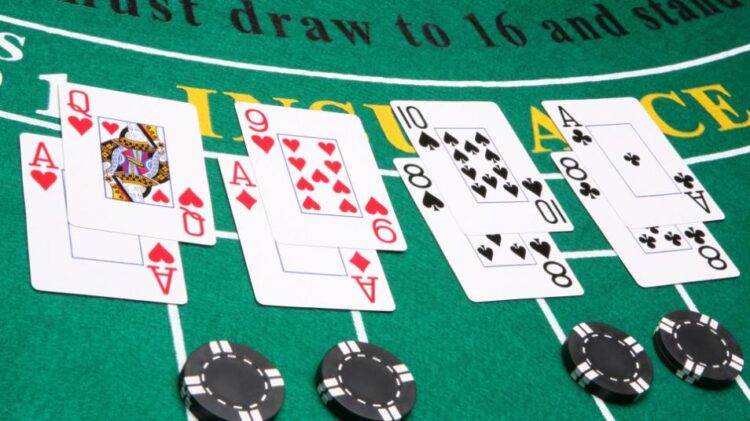
Blackjack is unique among casino card games because it is not a game of pure chance. While a player cannot control which cards are dealt from the shoe, they can control how they respond to those cards. This element of choice shifts blackjack from a simple lottery into a mathematical puzzle. By understanding the underlying odds and probabilities, a player can make decisions that minimize the casino house advantage and optimize their long-term performance.
To navigate a blackjack table successfully, one must look past temporary winning or losing streaks and focus instead on statistical variance. Every decision to hit, stand, double down, or split a pair carries a specific mathematical probability of winning or losing. Mastering these numbers allows a player to transition from relying on gut instinct to executing statistically sound strategy.
The Concept of the House Edge
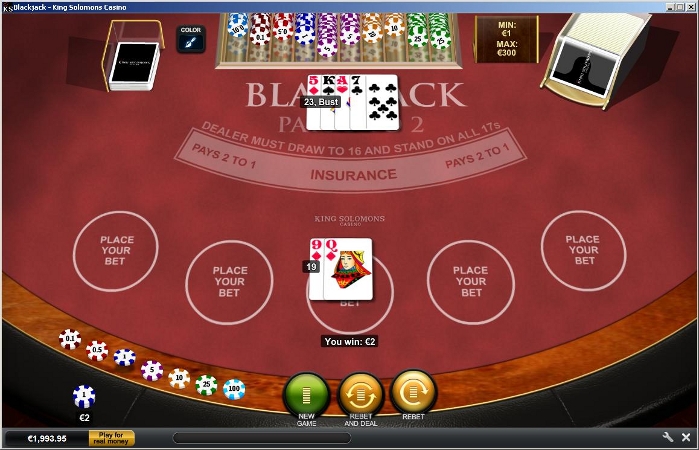
The house edge represents the mathematical advantage that a casino holds over a player in a specific game. In blackjack, this edge exists primarily because the player must act first. If a player draws cards and their total exceeds twenty-one, they bust and lose their wager immediately, even if the dealer subsequently busts in the exact same round.
Without a deliberate strategy, an average player faces a house edge of roughly two percent to more than five percent, depending on table rules and personal decision-making. However, because blackjack allows for tactical choices, a player who perfectly executes basic strategy can reduce this house edge to less than one-half of a percent. This makes blackjack one of the most favorable games for players in the entire casino landscape.
Basic Mathematical Probability in Card Decks
To understand advanced blackjack odds, a player must first comprehend the composition of a standard fifty-two card deck. The distribution of card values dictates every probability calculation in the game.
-
The Dominance of Ten-Value Cards: There are four cards of each nominal value from two through nine. However, tens, jacks, queens, and kings all hold a value of ten. This means there are sixteen ten-value cards in a single deck, accounting for roughly thirty-point-seven percent of all cards.
-
The Probability of Drawing a Ten: Because nearly one-third of the deck consists of ten-value cards, mathematical models operate on the assumption that the next card drawn, or the dealer’s hidden hole card, has a higher probability of being a ten than any other single value.
-
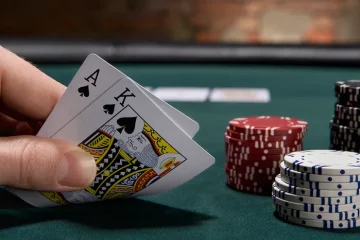
The Natural Blackjack Probability: The odds of being dealt a natural blackjack (an ace and a ten-value card) on your first two cards from a single deck is calculated by multiplying the probability of drawing an ace by the probability of drawing a ten. This works out to approximately four-point-seven-five percent, or roughly once every twenty-one hands.
Dealer Bust Probabilities
A critical component of blackjack strategy involves analyzing the dealer’s upcard to estimate their likelihood of busting. Because the dealer must follow strict, mandatory rules—usually requiring them to hit until they reach at least a hard seventeen—their final outcomes are highly predictable based on their starting position.
Weak Upcards versus Strong Upcards
The dealer’s upcard can be categorized into two distinct groups based on the probability of a bust outcome.
-
The Bust Zone (Threes through Sixes): When the dealer shows a four, five, or six, they are in a highly vulnerable position. A dealer showing a five will bust approximately forty-two-point-eight percent of the time, while a dealer showing a six will bust roughly forty-two percent of the time. This occurs because any ten-value card or high card will force the dealer into a hard intermediate total, requiring another hit that often pushes them over twenty-one.
-
The Safe Zone (Sevens through Aces): When the dealer shows a high upcard, their probability of busting drops significantly. A dealer showing a ten-value card will bust only about twenty-one-point-four percent of the time, while an ace upcard results in a bust rate of roughly eleven-point-six percent. Against these cards, the dealer is highly likely to make a strong final hand of eighteen, nineteen, or twenty.
Player Bust Probabilities When Hitting
Understanding your own risk of busting is just as important as predicting the dealer’s outcome. The probability of breaking twenty-one increases exponentially with each additional card added to your total.
-
Hard Eleven or Lower: The probability of busting is zero percent, as no single card in the deck can push your total past twenty-one.
-
Hard Twelve: The probability of busting is approximately thirty-five percent.
-
Hard Thirteen: The probability of busting rises to roughly thirty-nine percent.
-
Hard Fourteen: The probability of busting reaches about fifty-six percent.
-
Hard Fifteen: The probability of busting climbs to roughly fifty-eight percent.
-
Hard Sixteen: The risk becomes critical, with a bust probability of approximately sixty-two percent.
These percentages illustrate why basic strategy charts advise players to stand on lower totals like twelve, thirteen, or fourteen when the dealer shows a weak upcard. Even though the player’s hand is weak, hitting carries a high risk of self-destruction, whereas standing forces the dealer to try and navigate their own high-bust probabilities.
How Table Rule Variations Alter the Odds
The baseline mathematical odds of blackjack are constantly shifting based on the specific rule configurations enforced by the casino or digital platform. Even minor rule changes can significantly alter the house edge.
-
Blackjack Payout Ratio: Traditional blackjack pays three to two on a natural twenty-one. However, many modern tables feature a six to five payout ratio. This seemingly small adjustment increases the house edge by roughly one-point-four percent, making it significantly harder for a player to maintain profitability over time.
-
Number of Decks in Use: Generally, the fewer the decks used in a shoe, the better the odds for the player. A single-deck game offers a lower house edge than an eight-deck shoe because it allows for greater card dependency effects, making it easier to hit natural blackjacks and execute effective doubles.
-
Soft Seventeen Rules: If a table requires the dealer to hit on a soft seventeen rather than stand, the house edge increases by approximately zero-point-two percent. This occurs because the dealer gets an extra opportunity to improve a weak seventeen into a higher winning total without the risk of busting on the initial hit.
Frequently Asked Questions
Why does a six to five blackjack payout hurt the player’s odds so dramatically?
A three to two payout rewards a player fifteen dollars for every ten dollars wagered on a natural blackjack. A six to five payout reduces that reward to twelve dollars for every ten dollars wagered. Over a long playing career, this reduction strips away a substantial portion of a player’s automatic premium payouts, giving the casino a much wider profit margin.
What are the odds of a push happening in an average hand of blackjack?
In a standard game played with basic strategy, a push (a tie where both the player and the dealer finish with the exact same total) occurs roughly eight to nine percent of the time. When a push happens, no chips change hands, and the player’s initial wager is returned to them entirely.
How does the probability of winning change after a long losing streak?
The probability of winning an individual hand remains exactly the same, regardless of previous outcomes. Each hand is an independent event governed by the remaining composition of the deck or shoe. Believing that a win is due simply because you have lost several hands in a row is a psychological trap known as the gambler’s fallacy.
Why is a hard sixteen considered the worst statistical hand in blackjack?
A hard sixteen is problematic because it sits in a mathematical dead zone. If you stand, your total is too low to beat a standard dealer hand unless the dealer busts entirely. However, if you hit, your personal probability of busting is roughly sixty-two percent, meaning both choices carry a high statistical probability of resulting in a loss.
Does the behavior or strategy of other players at the table affect your individual odds?
Mathematically, the decisions of other players at the table have no long-term statistical impact on your personal house edge. While an unconventional move by a fellow player might occasionally alter the specific card you receive on a single hand, those deviations randomize perfectly over time, meaning other players can neither help nor harm your overall mathematical probability.
What are the mathematical odds of being dealt consecutive natural blackjacks?
The odds of receiving a natural blackjack on any given hand are roughly one in twenty-one. To find the probability of receiving two consecutive blackjacks from a freshly shuffled deck, you multiply those probabilities together, resulting in an odds ratio of approximately one in four hundred and forty-one hands.
How do side bets like Insurance affect the baseline house edge of the game?
Side bets feature independent payout structures that carry significantly higher house edges than the standard game of blackjack. While standard basic strategy reduces the house edge to under one half of a percent, side bets often feature house advantages ranging from five percent to over fifteen percent, making them mathematically disadvantageous for strategic players.