Top 10 Blackjack Tips Every Online Player Needs to Know
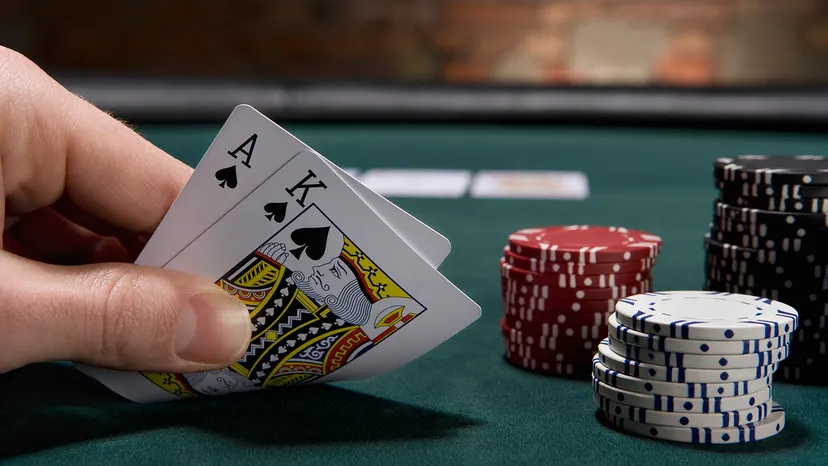
Blackjack remains one of the most popular casino card games in the digital landscape. Unlike games of pure chance like slots or roulette, blackjack combines luck with mathematical strategy, giving players a genuine opportunity to minimize the casino advantage. When playing in a digital space, users enjoy unique benefits, such as the ability to reference strategy guides in real time and play in a controlled environment without the distractions of a physical casino floor.
However, transitioning to virtual tables requires a specific approach. Whether playing a traditional software-generated game or a live-dealer stream, maximizing success requires discipline, mathematical consistency, and sharp decision-making. Applying the top ten essential tips helps online players optimize their gameplay, protect their capital, and make the most statistically sound moves on every hand.
1. Memorize and Apply Basic Strategy Perfectly
Basic strategy is the mathematically proven method for playing every single card combination against any potential dealer upcard. Developed through computer simulations and probability theory, basic strategy eliminates guesswork and emotional intuition from the table.
-
Utilize a Strategy Chart: Online players have the unique advantage of keeping a basic strategy chart open on a second screen or printed on their desk. Referencing this chart on every hand ensures you make the optimal move.
-
Trust the Math Over Your Gut: It can feel counterintuitive to hit a hard total of sixteen when the dealer shows a ten, but statistics prove that hitting gives you a slightly better chance of minimizing long-term losses than standing. Consistency is the key to reducing the house edge to less than one half of a percent.
2. Always Split Aces and Eights
When you are dealt a pair, you have the option to split them into two independent hands by placing an additional wager equal to your original bet. While certain pairs depend heavily on what the dealer is showing, two pairs must always be split regardless of the dealer upcard.
-
The Problem with a Pair of Eights: A pair of eights totals a hard sixteen, which is widely considered the worst starting hand in blackjack. Standing leaves you highly vulnerable to losing, while hitting carries a massive risk of busting. Splitting them gives you two separate hands starting with an eight, a much stronger foundation for building a winning hand.
-
The Power of Split Aces: A pair of aces totals either two or twelve, neither of which is a strong starting position. Splitting aces allows you to catch a ten-value card on either hand, giving you a high probability of hitting a strong twenty-one.
3. Never Split Fives or Tens
Just as some pairs are mandatory splits, others should never be broken apart. Splitting the wrong cards can turn a highly profitable situation into a double loss.
-
Treat Fives as a Hard Ten: A pair of fives equals ten. This is an excellent foundation for a single hand, especially for doubling down if the dealer shows a weak upcard like a five or six. Splitting fives leaves you with two weak hands starting at five, which is statistically disadvantageous.
-
Keep Your Tens Safe: A pair of tens equals a hard twenty. This is the second-best hand in blackjack and has an incredibly high probability of winning. Splitting tens forces you to risk a guaranteed winning position in the hopes of getting two good hands, which is a mathematically poor gamble over time.
4. Double Down When You Hold an Eleven
Doubling down allows you to double your initial wager in exchange for committing to take exactly one more card. This is one of the most powerful tools a player has to maximize winnings when the odds are heavily in their favor.
When your first two cards total eleven, you are in the prime position to double down. Because tens, jacks, queens, and kings all hold a value of ten, there is a high statistical probability that your next card will be a ten-value card, giving you a perfect twenty-one. Most basic strategy configurations recommend doubling down on a hard eleven against any dealer upcard except an ace.
5. Avoid the Insurance Bet entirely
When the dealer’s face-up card is an ace, the platform will offer an insurance side bet, which pays out two to one if the dealer turns over a natural blackjack. While this might seem like a smart way to protect your main wager, insurance is statistically a losing proposition.
The mathematical reality is that the odds of the dealer holding a ten-value card in their hole do not justify the payout rate. Insurance is essentially a separate side bet on whether the dealer has a blackjack, and it carries a remarkably high house edge. Professional players treat insurance as a distraction designed to slowly erode a player’s bankroll over time.
6. Understand Table Variations and Specific Rules
Not all online blackjack games are created equal. Small variations in table rules can have a substantial impact on the overall house edge. Before sitting down at a virtual table, review the specific rule manifest.
-
Look for Three to Two Payouts: Ensure the table pays three to two for a natural blackjack. Many modern online tables have shifted to a six to five payout structure, which significantly increases the house edge and drains player profits.
-
Dealer Hits or Stands on Soft Seventeen: Check whether the dealer must hit or stand on a soft seventeen (a hand totaling seventeen that includes an ace valued as eleven). A table where the dealer stands on a soft seventeen is more favorable to the player.
-
Double After Split Restrictions: Confirm whether the platform allows you to double down after splitting a pair. Having this option lowers the house edge and gives you more flexibility to capitalize on strong hands.
7. Embrace Strict Bankroll Management
The most robust strategy can fail if a player does not manage their financial capital properly. Bankroll management ensures that a normal streak of bad luck does not wipe out your entire funds.
-
Establish a Session Limit: Decide on a fixed amount of money you are willing to risk before you log into your casino account. Treat this money as an entertainment expense, and walk away immediately if it is depleted.
-
Keep Bet Sizes Relative: Your standard unit bet should represent a small percentage of your total bankroll—ideally between one and two percent. If you have a hundred dollars allocated for a session, your base bet should be one or two dollars, allowing you to withstand natural variance and stay in the game longer.
8. Utilize Free-Play Modes to Practice
One of the greatest benefits of online casinos over brick-and-mortar establishments is the availability of demo or free-play modes. These versions utilize the exact same random number generation algorithms as real-money games but use virtual credits instead.
Use these free tables to practice your basic strategy chart navigation, test bankroll discipline, and get comfortable with the pacing of the software interface. Practicing without financial risk ensures that when you do wager real capital, your movements are precise and free of mechanical errors.
9. Ignore Progressive Betting Systems
Many amateur players fall victim to progressive betting systems like the Martingale, where you double your bet size after every loss with the theory that a single win will recover all previous losses.
While these systems sound enticing in theory, they fail catastrophically in practice. A prolonged losing streak can cause bet sizes to escalate exponentially within minutes, quickly hitting either the table’s maximum bet limit or exhausting your entire bankroll. Stick to a flat, consistent betting strategy or conservative increases based only on winning sessions.
10. Avoid Compounding Mistakes by Chasing Losses
Experiencing a losing streak can trigger an emotional response known as tilt, where a player becomes frustrated and begins making reckless decisions to win their money back quickly.
Chasing losses often leads to ignoring basic strategy, making risky double downs, increasing bet sizes inappropriately, or playing side bets with massive house edges. If you find your emotions dictating your clicks rather than strict mathematical logic, it is time to close the application, take a break, and step away from the device.
Frequently Asked Questions
Is card counting possible when playing online blackjack?
Card counting is generally ineffective against standard online software because the virtual deck is automatically reshuffled using a random number generator after every single hand. In live-dealer games, operators typically swap out the shoe or execute a shuffle once half of the deck is penetrated, rendering traditional card counting highly impractical for digital players.
What is the difference between a hard hand and a soft hand?
A soft hand contains an ace that can be counted as either a one or an eleven without causing the hand to bust. For example, an ace and a six form a soft seventeen. A hard hand either does not contain an ace, or contains an ace that can only be counted as a one to avoid exceeding twenty-one, making hard hands much riskier to hit.
Are side bets like Perfect Pairs worth playing in online blackjack?
While side bets offer exciting, high-ratio payouts, they carry a significantly higher house edge than the main game of blackjack. Over time, consistently wagering on side bets will rapidly deplete your bankroll, meaning they should be avoided if your primary objective is long-term sustainability and strategic success.
How do I know if an online blackjack game is fair and not rigged?
To ensure fairness, only play at online casinos that are fully licensed and regulated by reputable state or national gaming commissions. These regulated platforms undergo regular third-party audits by independent testing labs to verify that their random number generators operate with true mathematical randomness.
What should I do if my digital connection drops mid-hand?
Reputable online platforms have built-in safety protocols for connectivity issues. If you are disconnected during a software-based game, the hand will usually freeze and resume exactly where you left off when you log back in. In live-dealer games, your hand will automatically stand if you do not make a decision within the designated time limit.
Is it better to play live-dealer blackjack or standard software blackjack?
Both options have unique advantages depending on your goals. Standard software blackjack allows you to play at your own pace, making it ideal for beginners who need time to reference strategy charts. Live-dealer blackjack provides a more immersive, authentic casino social experience and operates at a slower, more deliberate speed.